how Pressure Distorts Judgment: Understanding and Improving Decision-Making Under Pressure
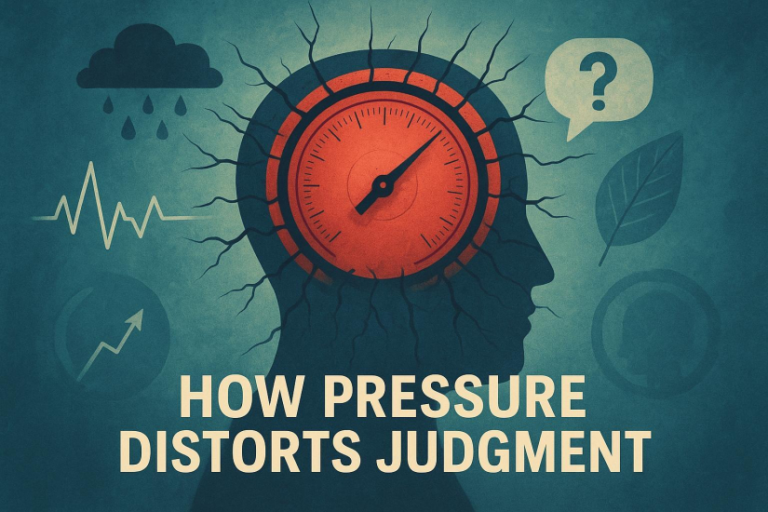
Pressure affects everyone — from emergency responders and surgeons to managers and parents. but how exactly does pressure distort judgment? Understanding the psychology and neuroscience behind how stress shapes decisions can definitely help you recognize common pitfalls and adopt proven strategies to improve decision-making under pressure. This comprehensive guide explains the mechanisms, outlines common cognitive biases, provides practical tips, and presents real-world examples so you can make better choices when stakes are high.
Introduction: Why ”How Pressure Distorts judgment” Matters
When people ask “how pressure distorts judgment,” thay’re often trying to explain why smart people make mistakes in high-stakes situations. Pressure activates physiological and cognitive responses that can narrow attention, accelerate decision-making, and increase reliance on heuristics. These are adaptive in some contexts but can lead to costly errors in others. Whether your goal is to lead a team, trade markets, or perform under public scrutiny, being aware of how pressure influences decisions is the first step toward better outcomes.
How Pressure Affects the Brain and behavior
decision-making under pressure involves the interaction of stress hormones, brain regions, and cognitive resources:
- Stress hormones: Cortisol and adrenaline surge during stress, altering attention and memory.
- Amygdala activation: Heightened emotional responses can trigger fight-or-flight reactions, increasing reactivity.
- Prefrontal cortex impairment: The PFC, responsible for planning, working memory, and impulse control, becomes less effective under high stress.
- Reduced working memory: Cognitive load increases, leaving less bandwidth for complex analysis and long-term thinking.
- Faster, heuristic-driven processing: The brain favors quick shortcuts or rules of thumb (heuristics) rather of careful deliberation.
in short, stress shifts the balance from thoughtful, analytical processing to faster, emotionally-driven decision-making
Common Ways Pressure Distorts Judgment
Pressure can introduce predictable distortions. Recognizing these patterns allows you to guard against them:
Tunnel Vision and Attentional Narrowing
Under pressure, people focus on a limited set of cues — often the most salient or recent — and ignore other relevant facts. This tunnel vision can cause missed opportunities or oversight of critical risks.
Confirmation Bias and Overconfidence
When stressed,decision-makers are more likely to seek out information that confirms their initial choice and dismiss contradictory evidence. Overconfidence can grow, especially after a streak of small wins.
Anchoring and Framing Effects
Time pressure or stress increases reliance on anchors (initial numbers or ideas) and on how information is framed. Small differences in phrasing can dramatically shift choices.
Loss Aversion and Risky Shifts
Pressure can push people toward risk-seeking behavior to avoid perceived losses or push them to be overly risk-averse depending on context. Both extremes can be harmful.
Satisficing and Decision Avoidance
Rather then optimizing, stressed individuals often “satisfice” — choosing the first acceptable option. In complex scenarios this leads to suboptimal outcomes.
Emotional Hijacking
Strong emotions (fear, anger, pride) triggered by pressure can override rational assessment and lead to impulsive choices or escalation of commitment.
SEO Keywords to Note
Throughout this article, you’ll see important search terms related to this topic used naturally, including: “pressure distorts judgment”, “decision-making under pressure”, “stress and judgment”, “cognitive bias”, ”high-pressure situations”, and “improve decision making”. These keywords reflect the questions people search for when trying to understand or solve problems related to decision-making under stress.
Table: Common Distortions and Quick Fixes
| Distortion | How It Appears | Quick Fix |
|---|---|---|
| Tunnel Vision | Ignoring peripheral info | Pause, scan for alternatives |
| Anchoring | Fixating on first number | Reset anchor, get fresh input |
| Confirmation Bias | Seeking only supporting data | Assign a devil’s advocate |
| Satisficing | Choosing “good enough” | Use checklists and criteria |
Case Studies: How Pressure Distorts Judgment in Real Life
Case Study 1: Emergency Medicine
In emergency rooms, clinicians face time pressure, emotional intensity, and incomplete data. Under pressure,a physician may anchor on an initial diagnosis and miss atypical presentations. Hospitals that adopt checklists, rapid-team huddles, and structured handoffs significantly reduce diagnostic errors and improve patient outcomes.
Case Study 2: Financial Trading
Traders experience high stakes, fast feedback, and social comparison. Under pressure, traders are prone to overtrading, confirmation bias, and risk-seeking behavior, especially after losses (loss aversion). Strategies like pre-defined stop-loss levels, algorithmic rules, and cooling-off periods help mitigate errors.
Case Study 3: Leadership Decisions During Crises
Executive teams making rapid strategic decisions can fall prey to groupthink and anchoring. Companies that prepare crisis playbooks, rehearse scenarios, and appoint a structured decision process (time-limited deliberation and external advisors) make more resilient choices.
Practical Tips to Improve decision-Making Under Pressure
Here are evidence-based strategies that help you counter the ways pressure distorts judgment:
- prepare and rehearse: Practice scenarios and simulations so responses become automatic and less reliant on stressed cognition.
- Use checklists and decision rules: Checklists reduce reliance on memory and prevent omission errors. Predefined decision rules reduce bias.
- Pause and breathe: Short intentional breaks (even 30 seconds) and controlled breathing lower physiological arousal and restore prefrontal function.
- Limit options under time pressure: Use “two-option framing” when time is tight — pick between A or B rather than evaluating five alternatives.
- Assign roles and diversity of thought: A designated “devil’s advocate” and a diverse team reduce conformity and confirmation bias.
- Use external aids: Algorithms, checklists, and decision-support tools can maintain quality under pressure.
- Precommit and set thresholds: Predefined stop-losses, go/no-go criteria, and escalation thresholds remove on-the-spot emotional decisions.
- Improve baseline resilience: Sleep, hydration, nutrition, and exercise all reduce stress susceptibility and improve cognitive control.
- Reframe stress as challenge, not threat: Cognitive reappraisal (viewing stress as mobilizing energy) improves performance in many tasks.
Short Tactical Script for immediate Use
When you feel pressure rising, try this quick script:
- Stop for 20–60 seconds and take three deep breaths.
- State the decision goal out loud in one sentence.
- List the top two risks you must avoid.
- choose between the two best options, or defer wiht a time-limited plan.
first-Hand Experience: A Leadership Example
As a team leader working under deadlines, I learned that pressure tends to magnify small mistakes into major setbacks. Early in my career I made a rushed hiring decision because I felt pressured to fill a role quickly — the person didn’t fit the team and the cost of replacement was high. After that experience I implemented structured interviews, scorecards, and a short “cooling-off” period before final offers. Those small process changes reduced bias and improved outcomes. The lesson: system-level fixes frequently enough beat relying on willpower alone.
When Pressure Can Help
Not all pressure is harmful. Moderate pressure — known as eustress — can sharpen focus and heighten performance, especially for well-learned tasks. The key is understanding the pressure threshold where performance shifts from facilitation to impairment. Training, readiness, and resilience-building push that threshold higher, allowing you to use pressure as a performance enhancer rather than a decision trap.
Conclusion: Making Better Choices When It Matters Most
Understanding how pressure distorts judgment empowers you to design better environments, systems, and personal habits that improve decision-making under pressure. Recognize the common distortions — tunnel vision, anchoring, confirmation bias, satisficing, and emotional hijacking — and apply practical tools like checklists, precommitment, structured roles, and short breathing pauses. With preparation and simple process changes, you can reduce costly errors and make stronger decisions when the stakes are high.
Remember: pressure itself is not the enemy — unmanaged pressure is. By building resilient systems and practicing smart techniques, you can turn challenging moments into opportunities for clear, confident decisions.