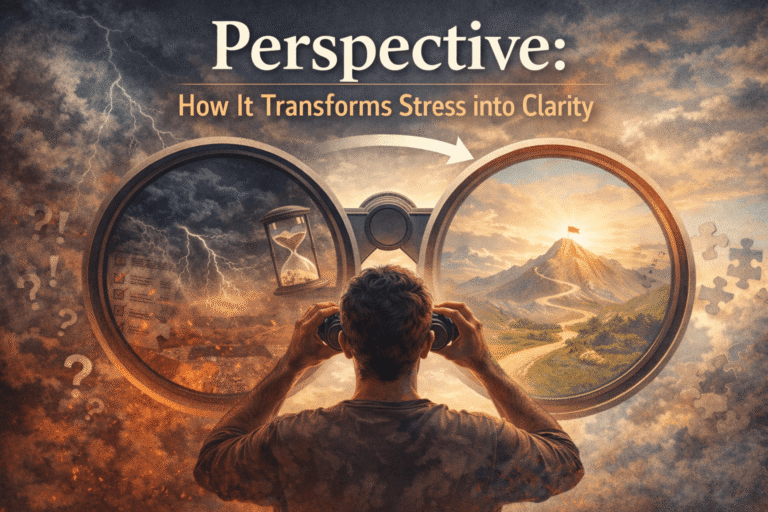
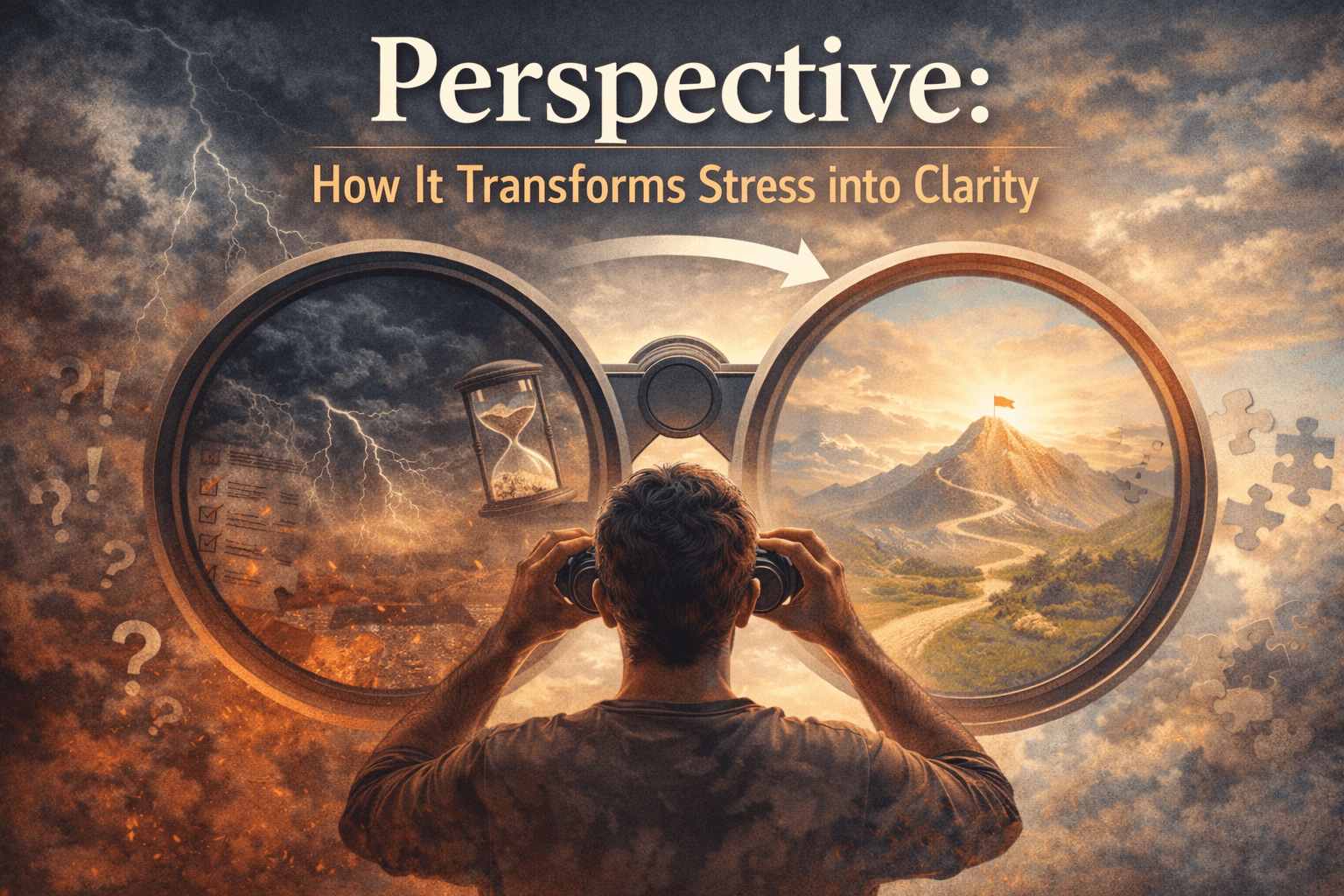
Perspective is perhaps the quietest catalyst for handling complex or difficult circumstances. It does not magically solve external problems, but rather adjusts the internal framework through which those problems are interpreted. This adjustment fundamentally alters the mental pressure felt during periods of flux or uncertainty. We often define a situation not merely by its objective facts, but by the relationship we hold to those facts in the present moment.
Developing a usable perspective is less about discovering new external information and more about reorganizing the information already present. It allows for the placement of current issues within a scale that feels manageable, helping to dissolve the paralyzing sense of exceptionalism that often accompanies stress. When the internal viewing mechanism is stable, external situational shifts tend to feel less disruptive.
The Mechanics of Shifting Focus
When situations become overwhelming, human attention tends to narrow severely. This focusing lens often captures only the immediate threat or complication, magnifying its perceived scale and importance. This narrow vision restricts the range of potential responses available, locking the thinker into a reactionary loop based on urgency rather than effectiveness.
Mental pressure often derives less from the situation itself and more from the perceived lack of options for navigating it. The mind struggles most when it feels trapped or constrained. By intentionally widening the field of view—even slightly—the mind gains critical space to breathe and process.
Narrow Vision and Immediate Pressure
A tightly held focus tends to prioritize the immediate alleviation of discomfort. This short-term relief, however, frequently obscures the long-term structural integrity of a solution. When operating under conditions of high mental pressure, the brain naturally seeks patterns that confirm the current state of emergency, inadvertently filtering out evidence of stability or available resources.
Shifting focus requires a conscious recognition that the urgency felt in the moment is not always proportional to the actual risk involved. This recognition helps integrate data points that were previously ignored, such as resources that lie just outside the immediate sphere of attention, or similar challenges that were successfully navigated in the past. These forgotten details can fundamentally alter the understanding of the present constraint.
Establishing Distance in Reflection
A key element of usable perspective is the ability to introduce cognitive distance between the observer and the event. When deeply entrenched in a difficult moment, the emotional resonance can obscure the underlying structure of the challenge. Reflection, therefore, is not merely revisiting the event, but rather repositioning oneself relative to it.
This distance helps differentiate between transient noise and fundamental signal. Noise includes the immediate emotional reactions, the quick judgments, the short-term anxieties, and the reactive opinions of others. These elements consume significant energy but rarely contribute to clarity. The signal, by contrast, is the core operational difficulty that actually requires sustained effort and attention.
A longer-term perspective tends to reframe immediate setbacks as isolated events rather than definitive conclusions. It helps anchor the present experience within a larger narrative of ongoing development. This grounding significantly reduces the inherent pressure to find an instantaneous, total solution, allowing for incremental, robust progress instead.
Perspective and Decision Quality
The quality of decisions made during periods of high uncertainty is frequently tied directly to the breadth of the current viewpoint. A limited perspective inherently favors immediate solutions, which often address symptoms rather than underlying causes. When choices must be made under stress, a broader context can provide necessary stabilization, acting as a counterbalance to emotional urgency.
Understanding the secondary and tertiary effects of potential actions requires looking past the urgent need for resolution. This deeper clarity allows for the careful weighing of trade-offs—acknowledging that sometimes the most comfortable immediate choice may create the greatest complications down the line. It is a recognition that effective action is often delayed action.
In many complex professional and personal contexts, uncertainty is the default state; certainty is the exception. Perspective does not remove the uncertainty, but rather helps calibrate the response to it. It shifts the internal focus from achieving absolute certainty—which is often impossible—to making the most robust choice possible based on imperfect, available information. This subtle shift fundamentally changes the experience of decision-making.
Cultivating Broader Understanding
Developing a richer understanding of any situation is rarely a single, definitive intellectual exercise. It involves continuous observation and a willingness to revise initial interpretations as new information arrives. The landscape of complex human situations is dynamic, meaning the interpretation that holds true today may need significant adjustment tomorrow.
This sustained mental effort requires acknowledging the inherent complexity involved in any meaningful change. It is an acceptance that insight often arrives sequentially, requiring patience as different variables reveal themselves over time. This process is not about reaching a dramatic moment of realization, but about incremental navigational refinement.
The steady practice of seeking a wider frame ensures that the decision-making process remains grounded in facts that extend beyond immediate convenience or momentary fear. It enables the identification of patterns that might repeat, and the anticipation of challenges that tend to accompany specific types of change.
Ultimately, perspective serves as a fundamental stabilizing influence when navigating the inevitable turbulence of life and work. It is a quiet discipline that involves recognizing the inherent biases of the immediate self and deliberately seeking a wider, more inclusive frame of reference. The continuous capacity to adjust this frame is fundamental to moving through challenging times with greater composure and a steady internal bearing.