
Clarity is often misunderstood as simply knowing the next step, but it is actually a deeper state of understanding the terrain, the objective, and the available resources. This profound perspective is less about immediate action and more about the quality of the decisions being made along the way. When true understanding is present, the subsequent efforts, regardless of their pace, are generally more direct and less prone to wasteful detours. This foundation shifts the focus from momentary bursts of activity to sustained, meaningful progress over time.
Focusing on rapid execution without first establishing a clear foundation tends to produce high levels of output with disproportionately low levels of enduring impact. Long-term outcomes rarely reward sheer velocity; they tend to reward precision and direction. Therefore, the internal work required to establish true clarity precedes, and dictates the efficiency of, any external effort.
Defining Foundational Understanding
Foundational clarity involves synthesizing various data points—internal desires, external constraints, historical context, and potential future resistance—into a cohesive mental map. It is not merely an intellectual exercise. It is the process of making the implicit explicit, allowing for rigorous testing of assumptions before significant resources are committed.
This depth of understanding acts as a reliable filter. When new information or unexpected obstacles arise, a clear perspective allows for rapid assessment of relevance and importance. Without this bedrock, every minor external shift can feel like a major crisis, demanding an immediate, often reactionary, response.
True clarity is inherently relational; it maps how different components interact within a larger system. It identifies levers that will produce the most change for the least effort, differentiating these from activities that merely consume time and energy. This discerning process saves effort later, by preventing the accidental reinforcement of flawed structures.
The Hidden Cost of Premature Speed
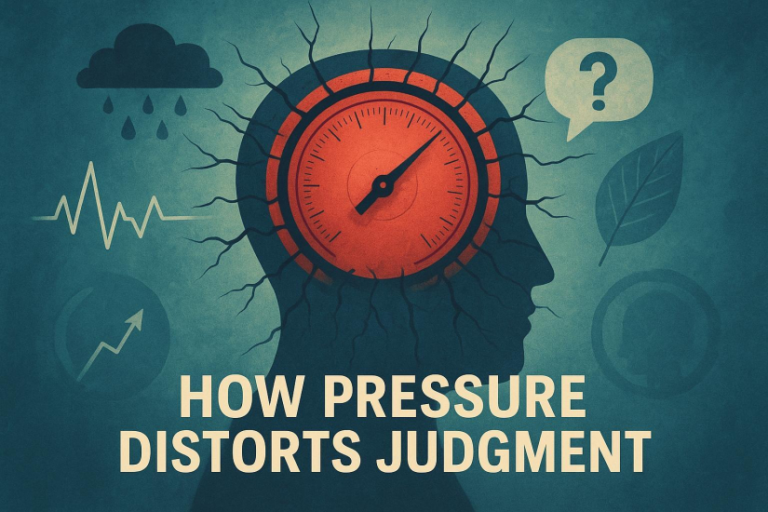
A common pattern is the rush to action, often driven by an internal pressure to demonstrate movement. This high operational speed, undertaken before foundational principles are settled, frequently results in compounding inefficiency. Initial errors, small at first, become deeply embedded because the speed of execution prevents adequate early review.
Resources—whether time, capital, or attention—are often misallocated based on an incomplete or faulty initial hypothesis. This necessitates expensive backtracking, reworking, or outright abandonment of efforts months later. The cumulative cost of these corrections usually far outweighs the temporary comfort gained by moving quickly in the beginning.
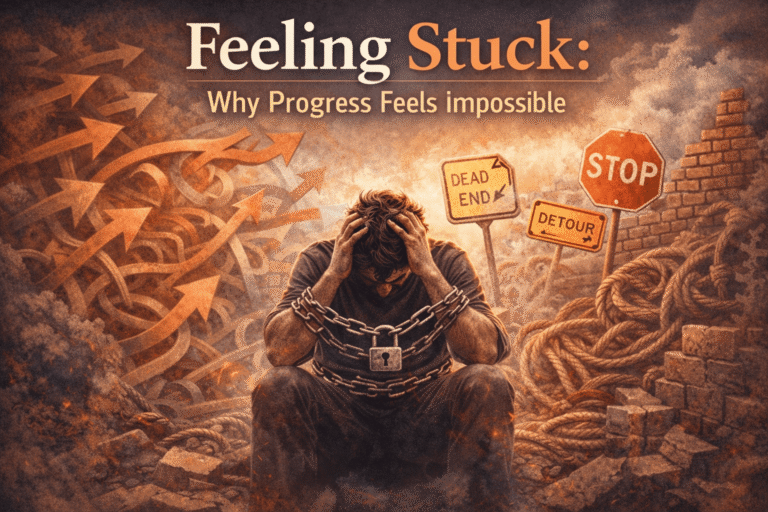
When the objective is ill-defined, speed serves only to accelerate the arrival at the wrong destination. The appearance of progress can mask significant strategic drift, making it difficult to recognize the point at which the original purpose was lost. Speed and momentum are useful tools only when the trajectory is accurate.
Navigating Ambiguity Through Perspective
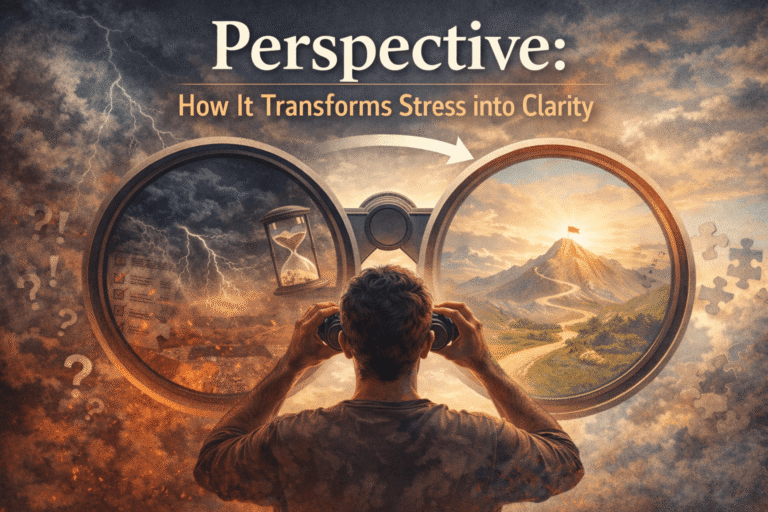
Uncertainty is a permanent feature of any complex endeavor. The pressure created by this ambiguity often pushes individuals toward seeking immediate, decisive answers, which frequently bypass the necessary, slow work of reflection. Clarity does not eliminate ambiguity, but it radically changes how the ambiguity is handled.
By establishing a robust understanding of the known variables, the unknown elements can be isolated and addressed systematically, rather than panicking over the entire landscape. This reflective approach transforms vast uncertainty into smaller, manageable risks. It allows decision-makers to identify which variables are most sensitive to change and which are stable over time.
Clarity provides an anchor when external circumstances shift dramatically. When priorities are clearly ranked and interconnected, an adjustment in one area does not collapse the entire structure. Instead, the necessary adjustments can be made with minimal emotional overhead, preserving the psychological resources needed for sustained performance.
The Function of Reflection in Long-Term Effort
Any outcome that is genuinely meaningful usually requires a sustained commitment across long periods, demanding resilience against fluctuating circumstances. A long-term view cannot be maintained simply through stubborn effort; it requires periodic reflection to ensure the path remains aligned with the destination.
The act of pausing, stepping back, and evaluating the current position against the intended outcome is vital. This reflection is often miscategorized as delay, but it is, in fact, the necessary quality control mechanism for direction. It is the moment when underlying assumptions are tested against current reality, rather than simply against hope.
This focus on quality of understanding over quantity of movement helps prevent burnout that often accompanies high-speed, directionless activity. The feeling of being busy without generating meaningful results is profoundly taxing. Genuine clarity, by focusing effort on high-leverage activities, provides a grounding sense of efficacy.
The Requirement for Deeper Clarity
Achieving deep clarity requires a deliberate shift away from instant gratification, which often manifests as the need to simply do something. It requires accepting that the initial slow pace of mapping and understanding is an investment, not a cost. This investment reduces the likelihood of catastrophic strategic error later on.
The mental landscape must be settled before complex decision-making can occur with reliability. This is often achieved not by generating more options, but by eliminating low-value choices with extreme prejudice. A comprehensive perspective reduces the perceived number of viable options down to the most responsible few.
Ultimately, the most successful long-term outcomes are typically reached by those who consistently prioritize deep, accurate understanding over immediate, vigorous execution. Speed is merely an accelerant; clarity determines the destination. Without that settled vision, accelerating forward simply guarantees a faster arrival at an unintended, often undesirable, endpoint. The foundational requirement remains the same: knowing where one stands, and why one seeks to move at all.